Introduction
What is Markdown?
As AI-powered search engines and large language models (LLMs) continue to evolve, many website owners and SEO professionals are exploring new ways to make their content more accessible to AI systems. One emerging trend is creating Markdown versions of web pages specifically for AI crawlers.
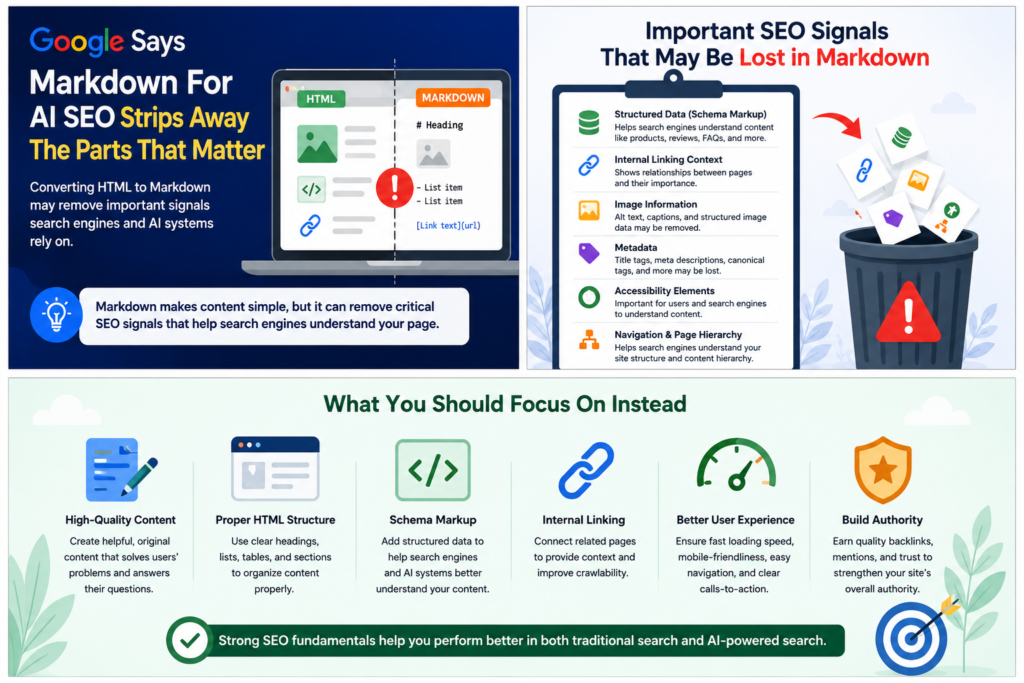
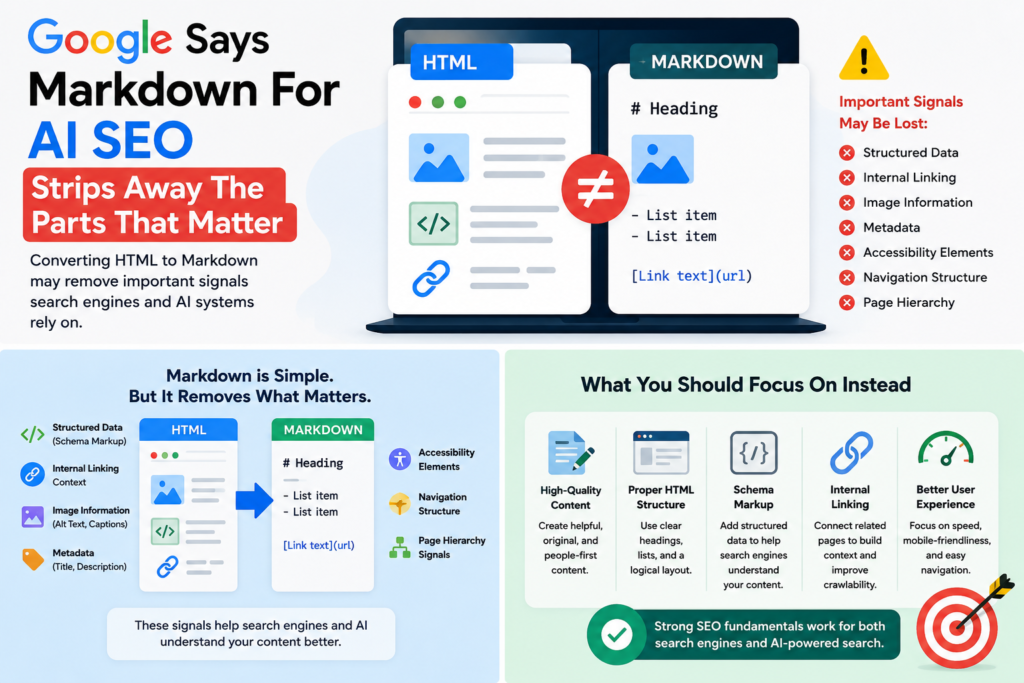
However, Google has recently clarified that relying on Markdown for AI SEO may not be the best approach. According to Google, converting HTML pages into Markdown can strip away important elements that help search engines understand and rank content effectively.
Markdown is a lightweight markup language that converts complex web content into simple, readable text. It removes many HTML elements and presents content in a clean format that is easier for humans and machines to read.
Because AI models can process plain text efficiently, some SEO experts have suggested creating Markdown versions of websites for AI bots.
Why Are People Using Markdown for AI SEO?
The main reasons include:
- Easier content extraction for AI systems
- Reduced page complexity
- Faster processing of content
- Lower token consumption for AI models
- Cleaner content structure
Many website owners believe that AI tools may better understand content presented in Markdown format.
Google's Concern About Markdown SEO
Google’s Search Relations team has highlighted a major issue with Markdown-based optimization. While Markdown makes content simpler, it also removes critical signals that search engines use to evaluate web pages.
Google explained that when HTML is converted to Markdown, valuable information can be lost, making it harder for search engines and AI systems to fully understand the content.
Important SEO Elements Lost in Markdown
1. Structured Data (Schema Markup)
Schema markup helps search engines understand:
- Products
- Reviews
- FAQs
- Services
- Business information
Most of this structured data disappears when content is converted into Markdown.
2. Internal Linking Signals
Internal links provide context about page relationships and website structure. Markdown versions often fail to preserve these signals effectively.
3. Metadata
Meta titles, descriptions, canonical tags, and other SEO metadata play a vital role in search visibility. These elements may be lost or simplified in Markdown.
4. Image Context
Images contribute to SEO through:
- Alt text
- Captions
- Structured image data
Markdown typically reduces or removes much of this information.
5. Accessibility Features
HTML includes accessibility elements that help both users and search engines understand content structure. These benefits are often diminished in Markdown formats.
What Should Website Owners Focus On Instead?
Rather than creating separate Markdown pages for AI bots, Google recommends focusing on proven SEO best practices:
Create High-Quality Content
Develop content that genuinely helps users solve problems and answer questions.
Use Proper HTML Structure
Maintain clear:
- H1, H2, and H3 headings
- Lists and tables
- Content hierarchy
Implement Schema Markup
Structured data helps search engines and AI systems understand your content more accurately.
Improve Internal Linking
Build a logical site architecture that connects related pages and improves crawlability.
Optimize User Experience
Focus on:
- Fast page speed
- Mobile responsiveness
- Easy navigation
- Clear calls-to-action
The Future of AI SEO
AI search is changing how content is discovered, but traditional SEO fundamentals remain important. Search engines and AI systems still rely on signals such as:
- Content quality
- Website authority
- Technical SEO
- Structured data
- User experience
Businesses that continue to invest in these areas are likely to perform better in both traditional and AI-driven search environments.
Conclusion
Google’s latest statement serves as an important reminder that simplifying content for AI should not come at the expense of valuable SEO signals. While Markdown may make content easier for AI systems to process, it can remove critical information that helps search engines understand and rank web pages.
Instead of creating separate Markdown versions for AI SEO, focus on producing high-quality content, maintaining strong technical SEO, and implementing structured data. These strategies will help your website remain visible and competitive as both traditional and AI-powered search continue to evolve.